RS PRO 3.6V Litium-tionylklorid, Tags Terminal, AA batteri, 2.6Ah
- RS-varenummer:
- 778-1103
- Brand:
- RS PRO


Ikke tilgængelig
RS lagerfører ikke længere dette produkt
Alternativ
Dette produkt er ikke tilgængeligt i øjeblikket. Vi anbefaler dette alternativ.
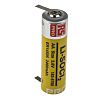
(Leveres Pr. stk.)
Kr. 64,48
(ekskl. moms)
Kr. 80,60
(inkl. moms)
- RS-varenummer:
- 778-1103
- Brand:
- RS PRO
Egenskaber
Tekniske referencer
Lovgivning og oprindelsesland
Generel produktinformation
Find lignende produkter ved at vælge én eller flere attributter.
Vælg alle | Attribut | Værdi |
|---|---|---|
| Brand | RS PRO | |
| Batterikemi | Litium-tionylklorid | |
| Nominel spænding | 3.6V | |
| Terminaltype | Tags | |
| Kapacitet | 2.6Ah | |
| Størrelse | AA | |
| Vælg alle | ||
|---|---|---|
Brand RS PRO | ||
Batterikemi Litium-tionylklorid | ||
Nominel spænding 3.6V | ||
Terminaltype Tags | ||
Kapacitet 2.6Ah | ||
Størrelse AA | ||
- COO (Country of Origin):
- GB
RS PRO Lithium Thionyl Chloride AA Battery
Lithium-thionyl chloride (Li-SOCl2) high energy density AA batteries from our RS PRO range. All cells are hermetically sealed in stainless steel cans (low magnetic signature and superior resistance to atmospheric corrosion). These batteries have been designed for use in applications where a device is used for a long period of time such as utility meters, smoke detectors and alarm systems.
These batteries use lithium thionyl chloride so they have a high energy density, low discharge rate, ideal for lengthy storage periods plus they are fully compliant with IEC60086-4 and IEC60079-11 safety standards. These AA batteries have an operating temperature -60゚C → +85゚C.
Lithium batteries what are the advantages?
• Nominal voltage of 3.6 V, greater than conventional cells
• High temperature range −60゚C to +85゚C
• High energy density, the highest of any primary battery
These batteries use lithium thionyl chloride so they have a high energy density, low discharge rate, ideal for lengthy storage periods plus they are fully compliant with IEC60086-4 and IEC60079-11 safety standards. These AA batteries have an operating temperature -60゚C → +85゚C.
Lithium batteries what are the advantages?
• Nominal voltage of 3.6 V, greater than conventional cells
• High temperature range −60゚C to +85゚C
• High energy density, the highest of any primary battery
Features and Benefits:
• High voltage response
• Low self-discharge rate for extended life
• Easy integration into compact systems
• Superior resistance to corrosion
• Non-flammable
• UL Component Recognition
• Non-rechargeable and should not be recharged
Typical Applications:
Lithium Thionyl Chloride speciality size batteries are used in electronic devices that require a small, compact source of power. Example applications include:
• Utility metering
• Automatic meter reading
• Tracking systems
• System Backups
• Real-Time Clocks
• Memory Backups
• Clock Supports
• Automotive Electronics
• Professional Electronics
FAQ’s
Are Lithium Thionyl Chloride Batteries Harmful?
Lithium Thionyl Chloride batteries can sometimes leak a substance called potassium hydroxide which is a caustic agent that can cause eye, skin and respiratory irritations. This risk is reduced by not mixing different manufacturer battery types, batteries of different chemistries and by the replacement of all batteries at the same time.
How to dispose of Lithium Thionyl Chloride Batteries?
Recycle responsibly, a wide range of schemes are available.
How to dispose of Alkaline/Lithium Batteries?
Recycle responsibly, a wide range of schemes are available
Safety Advice
• Keep out of sight and reach of children.
• Fire, explosion and burn hazard - Do not recharge, short circuit, crush, disassemble, heat above 100゚C (212゚F), incinerate
• Due to the high terminal voltage (3.6V), they are not suitable as direct replacements for other battery technologies in the same can sizes.
Guidance:
• Always install the batteries correctly as per instruction
• Ensure that the contact points are clean and conductive
• Do not mix different types of battery
• Do not heat or attempt to recharge the battery
• Do not dispose of in a fire
• Low self-discharge rate for extended life
• Easy integration into compact systems
• Superior resistance to corrosion
• Non-flammable
• UL Component Recognition
• Non-rechargeable and should not be recharged
Typical Applications:
Lithium Thionyl Chloride speciality size batteries are used in electronic devices that require a small, compact source of power. Example applications include:
• Utility metering
• Automatic meter reading
• Tracking systems
• System Backups
• Real-Time Clocks
• Memory Backups
• Clock Supports
• Automotive Electronics
• Professional Electronics
FAQ’s
Are Lithium Thionyl Chloride Batteries Harmful?
Lithium Thionyl Chloride batteries can sometimes leak a substance called potassium hydroxide which is a caustic agent that can cause eye, skin and respiratory irritations. This risk is reduced by not mixing different manufacturer battery types, batteries of different chemistries and by the replacement of all batteries at the same time.
How to dispose of Lithium Thionyl Chloride Batteries?
Recycle responsibly, a wide range of schemes are available.
How to dispose of Alkaline/Lithium Batteries?
Recycle responsibly, a wide range of schemes are available
Safety Advice
• Keep out of sight and reach of children.
• Fire, explosion and burn hazard - Do not recharge, short circuit, crush, disassemble, heat above 100゚C (212゚F), incinerate
• Due to the high terminal voltage (3.6V), they are not suitable as direct replacements for other battery technologies in the same can sizes.
Guidance:
• Always install the batteries correctly as per instruction
• Ensure that the contact points are clean and conductive
• Do not mix different types of battery
• Do not heat or attempt to recharge the battery
• Do not dispose of in a fire
Relaterede links
- Saft 3.6V Litium-tionylklorid AA batteri, 2.6Ah
- RS PRO 3.7V Litium-tionylklorid AA batteri, 2.6Ah
- Varta 3.6V D batteri Litium-tionylklorid Tags Terminal, 19Ah
- Varta 3.6V Litium-tionylklorid AA batteri, 2.5Ah
- Varta 3.6V Litium-tionylklorid AA batteri, 2.5Ah
- RS PRO 1/2 AA Litium-tionylklorid Batteri, 3.6V 1.2Ah
- RS PRO 1/2 AA Litium-tionylklorid Batteri, 3.6V 1Ah
- Varta 1/2 AA Litium-tionylklorid Batteri, 3.6V 1.2Ah